
Microcement Joinery vs. Laminates, Stone or Veneers
When planning a kitchen, bathroom, custom cabinetry project, or commercial fit-out, the finish you choose for your joinery can have a significant impact on both appearance and long-term performance.
Traditionally, the go-to options for cabinetry and benchtop surfaces have been laminates, stone and timber veneers. However, microcement joinery is becoming an increasingly popular alternative for homeowners, builders, and contractors seeking a seamless, modern finish.
So how does microcement compare as a joinery surface?
Related Reading: Comparing Microcement With Tiles, Concrete & Epoxy
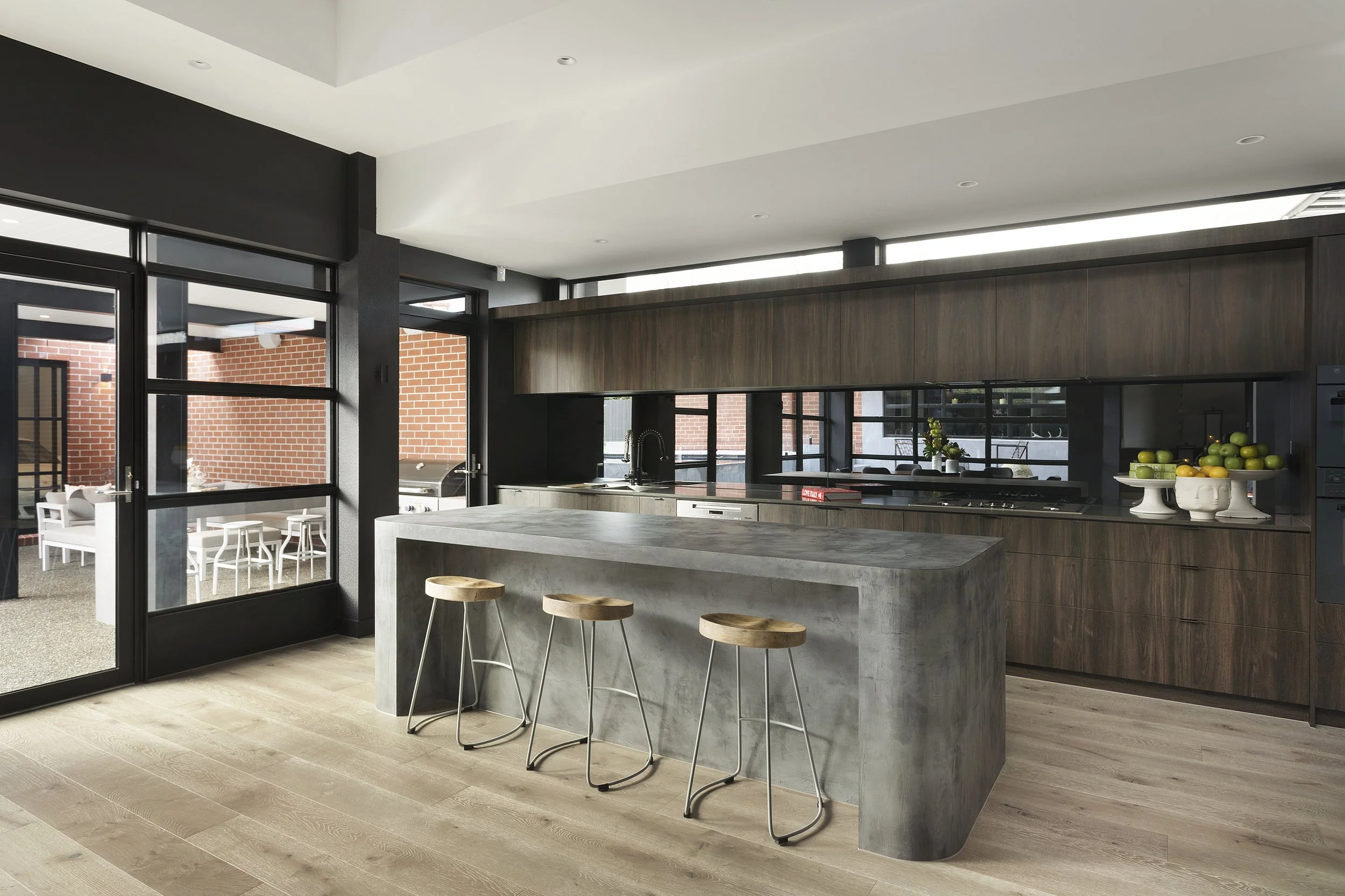
What Is Microcement Joinery?
Microcement is a cement-based surface finish that can be applied over existing substrates to cabinetry, benches and countertops, vanities, and other joinery pieces. The thin, hand-applied coating it creates a continuous surface similar in appearance to natural concrete, stone, or plaster depending on the finish specified.
Appearance and Aesthetics
One of the biggest differences between microcement and traditional joinery finishes is the overall visual effect.
Laminates: Manufactured products available in a wide range of colors and patterns. While modern laminates can convincingly replicate timber, stone, or concrete, they often retain the appearance of a factory-produced finish.
Natural stone: Natural stone has long been associated with premium interiors, valued for its organic patterns, depth, and unique character.
Timber veneers: Provide the natural warmth and variation of real wood, which is a staple in both traditional and contemporary architecture.
Microcement: Because it is hand-applied, every surface has subtle movement, texture, and variation created by the trowel markings. This achieves a natural and organic appearance, with a finish that can range from smooth and refined to more tactile and dynamic depending on the application technique and the desired look.
For projects seeking the raw character of concrete, the softness of plaster, or the understated elegance often associated with natural stone, microcement provides a distinctive visual alternative while allowing for seamless application across multiple surfaces. The result is a modern, minimalist, or monolithic finish with natural variation that can’t be replicated with other manufactured materials.
The Advantage of Seamless Surfaces
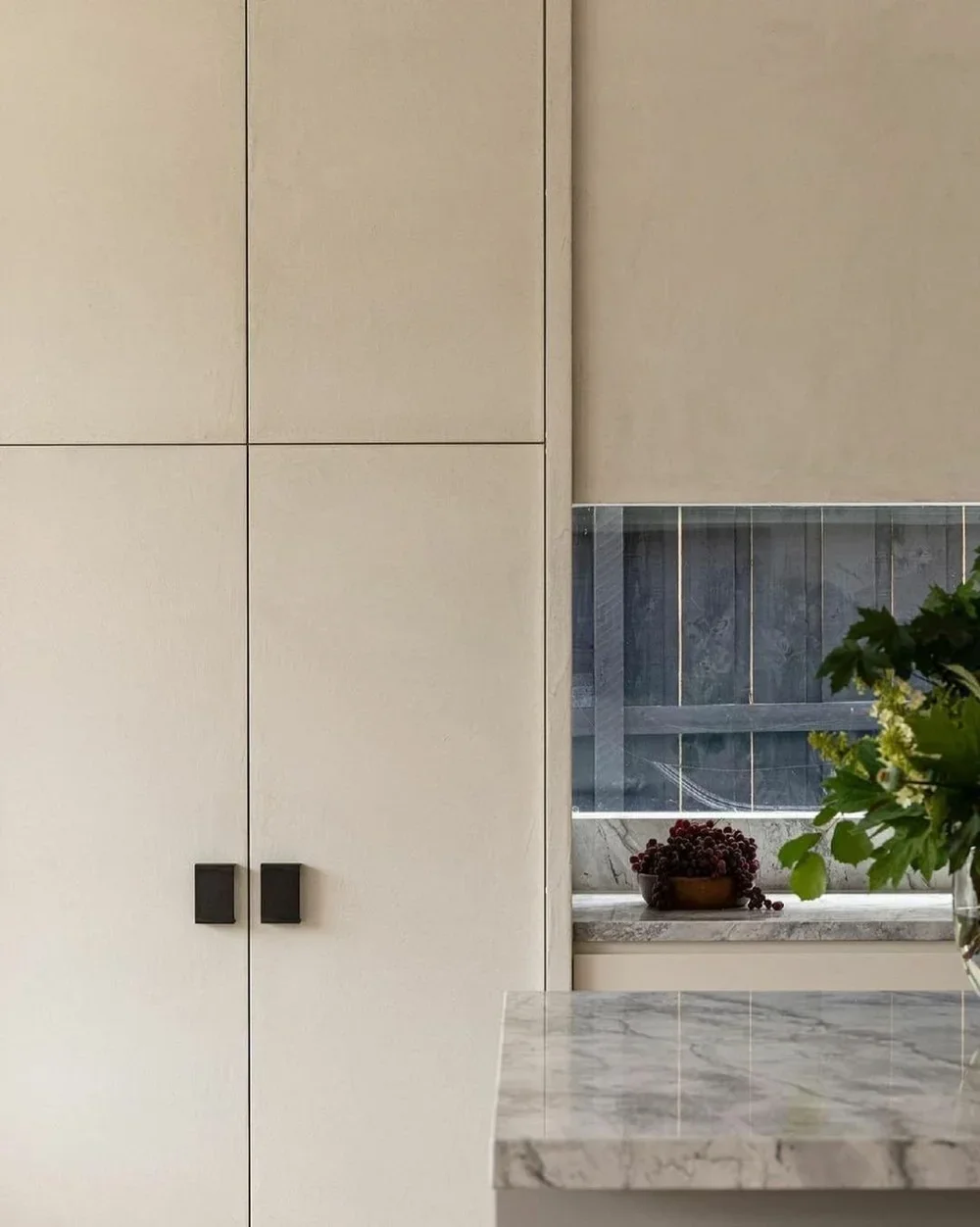
A key benefit of microcement is its ability to create seamless joinery integerations.
Traditional laminates and veneers typically require visible joins, edge treatments, or transitions between cabinetry, benchtops, splashbacks, and surrounding surfaces. While these materials can create beautiful results, they often rely on multiple components being fabricated and installed separately.
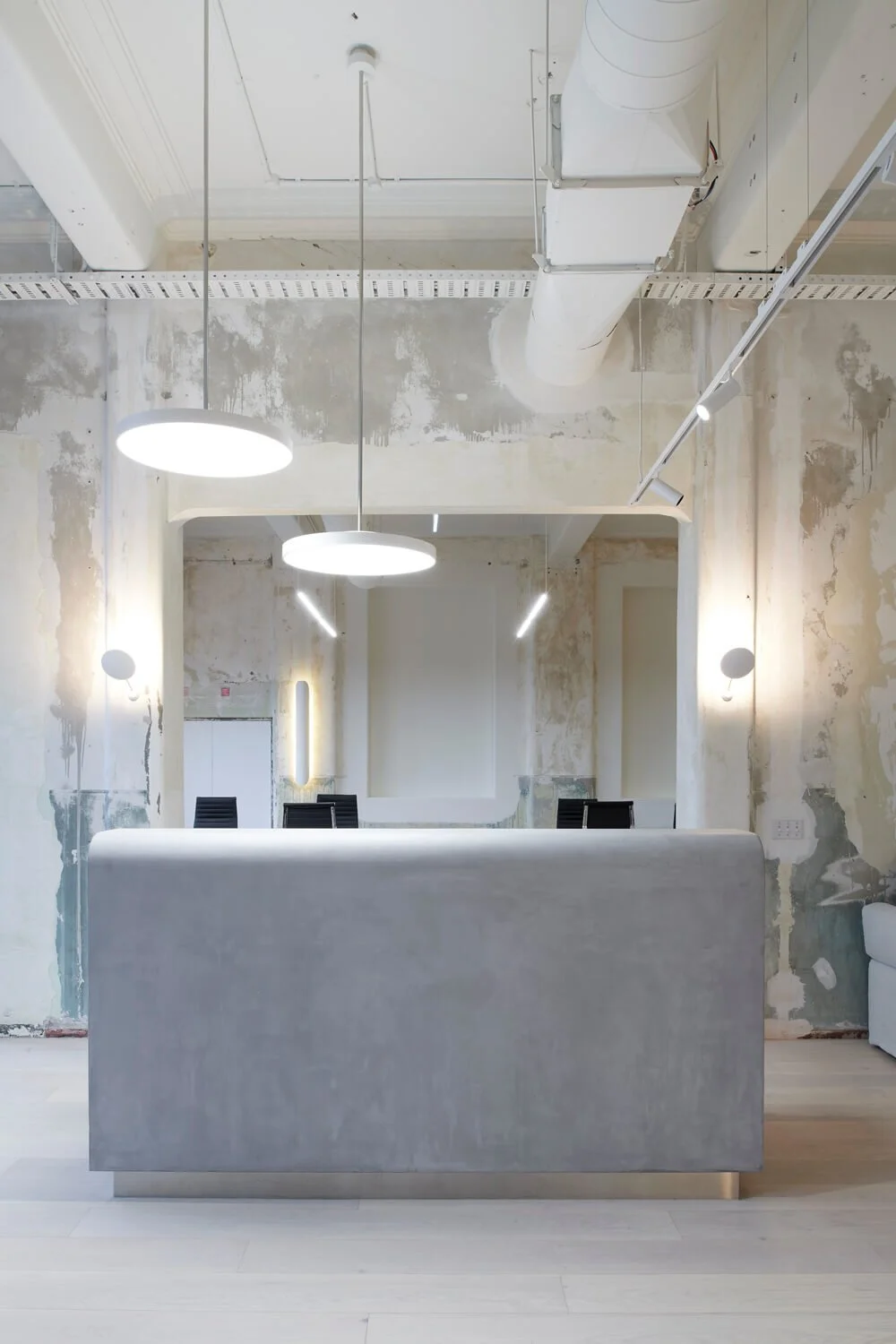
While custom-fabricated stone can be used to create monolithic islands and integrated joinery features, achieving this often involves complex detailing, multiple slabs, and significant fabrication costs. Microcement offers an alternative approach, allowing a continuous finish to be applied directly across cabinetry, benchtops, splashbacks, walls, and other surfaces with minimal visual interruption.
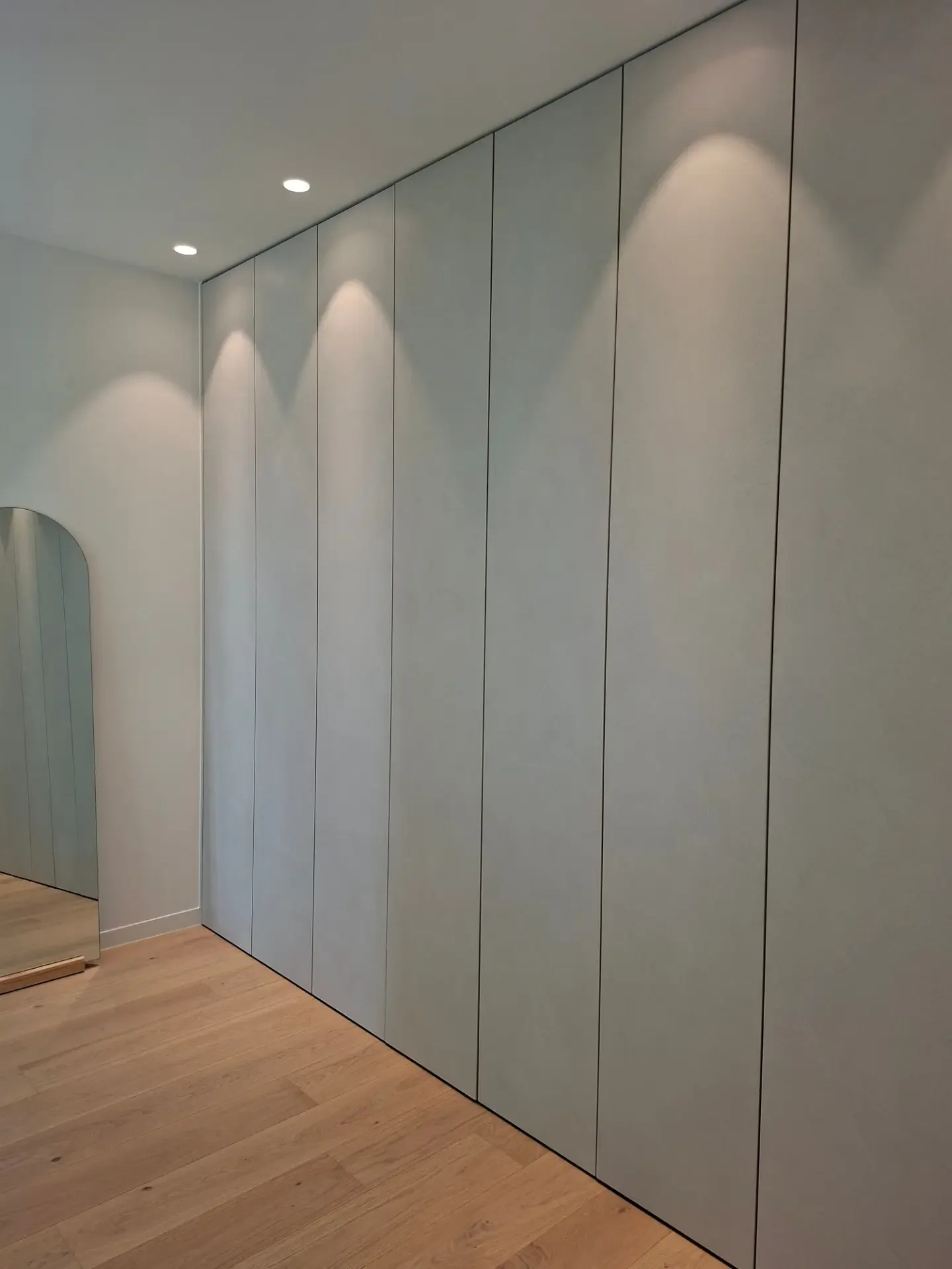
This allows a unified appearance with minimal visible transitions, as you have continuous finishes across multiple surfaces within a room.
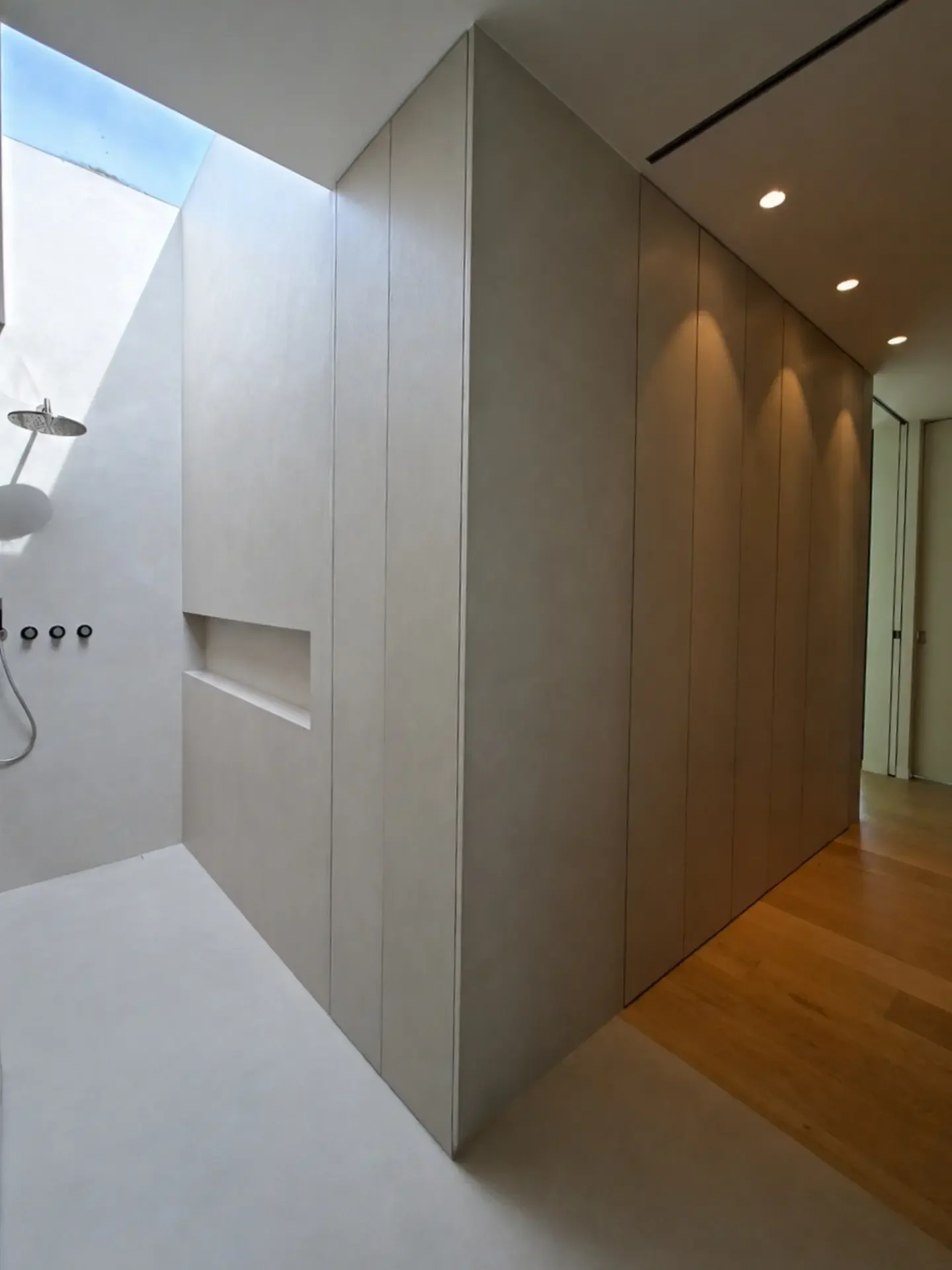
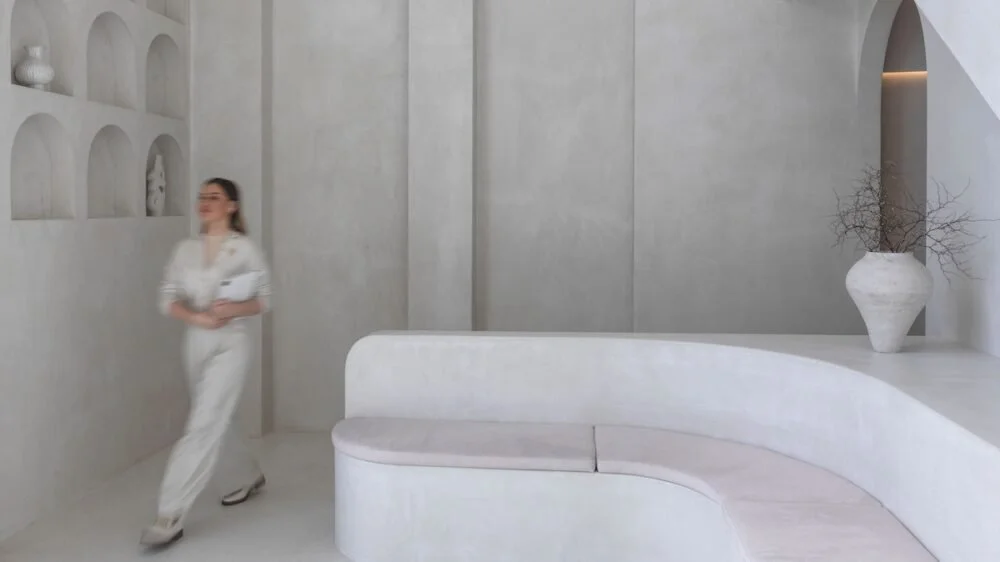
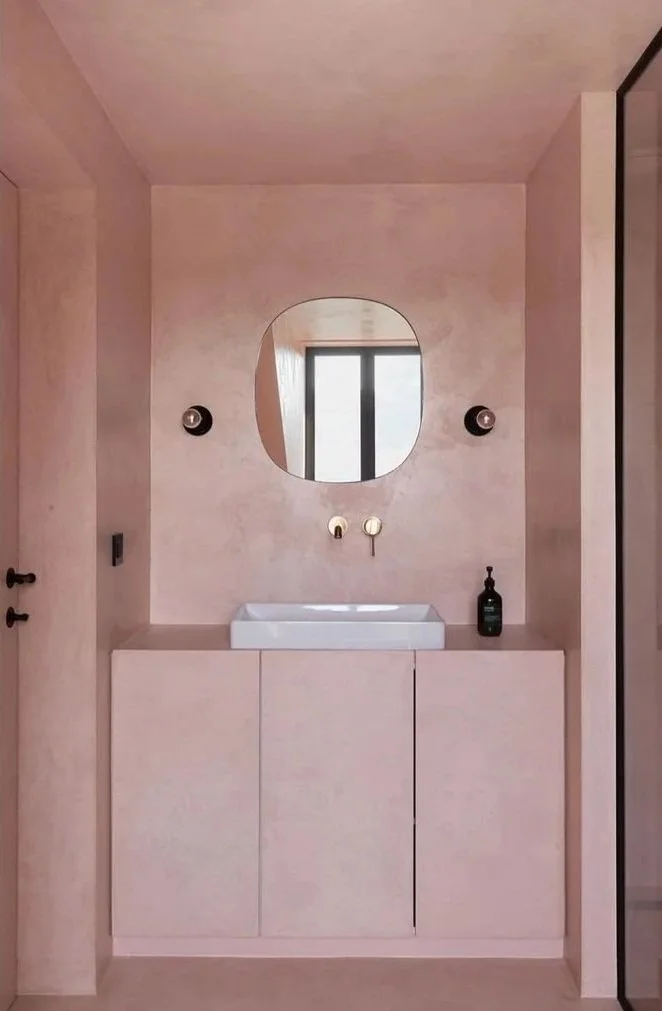
Kitchen islands can appear as a single solid form while vanities, cabinetry, built-in shelving and wall niches can appear as a natural extension of the wall surface — and better yet, even blend into flooring.
The result is a cleaner and more cohesive look that is difficult to achieve using conventional joinery finishes.
Related Reading: What Clients Are Really Worried About With Material Selection
Durability Considerations
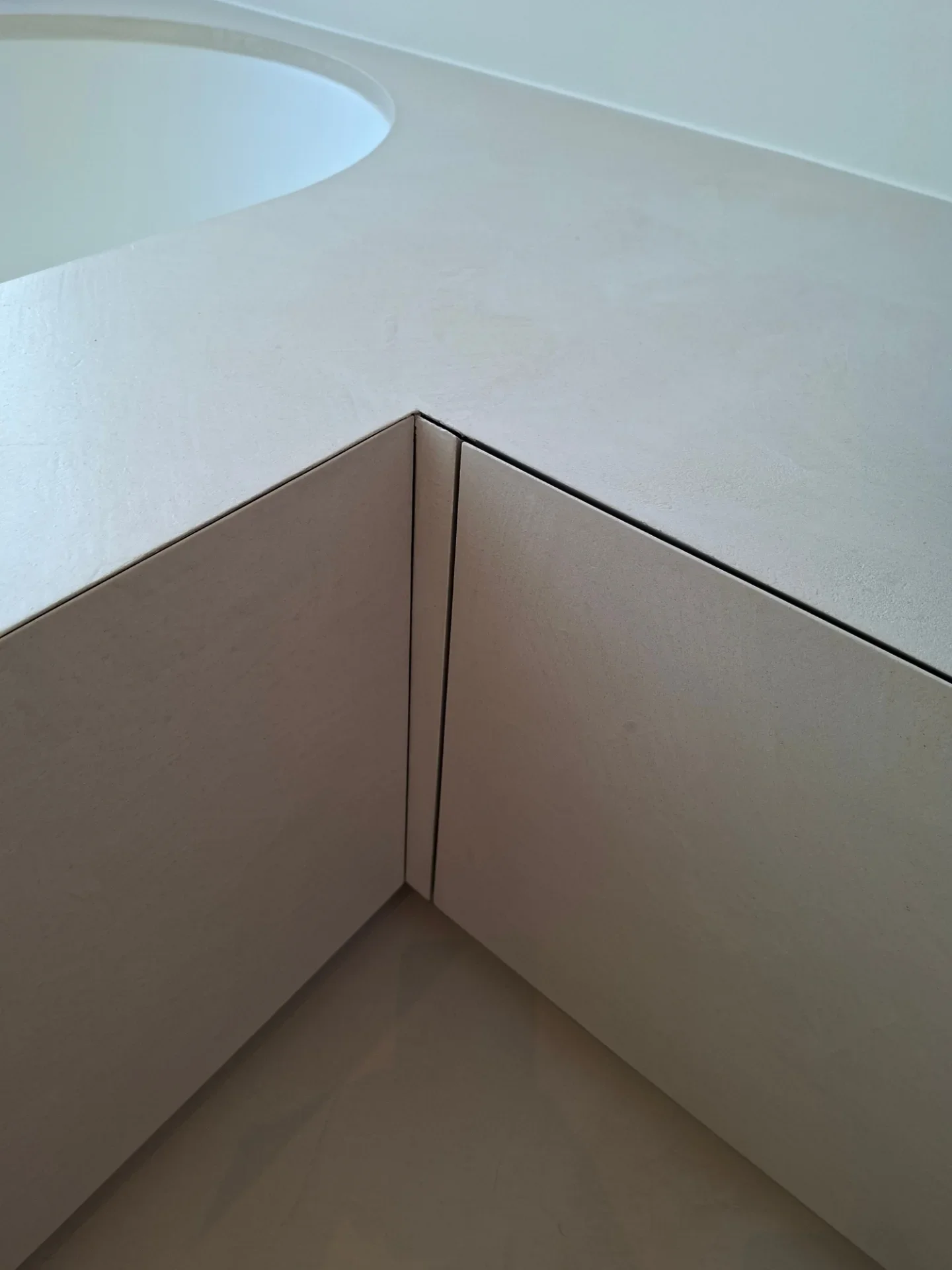
Durability is an important factor when selecting any finish, but especially for joinery. Kitchen cabinets, bathroom vanities, benchtops, shelving, and furniture are all exposed to daily use and need to withstand knocks, scratches, moisture, and general wear over time.
Laminates: Known for being resistant to scratching and everyday wear, but they can be difficult to repair if chipped, lifted, or damaged. Moisture intrusion at exposed edges can also lead to substrate swelling over time.
Timber veneers: Can be more susceptible to dents, scratches, and water damage if not properly protected.
Natural stone: Renowned for its longevity and resistance to everyday wear, making it a popular choice for benchtops and high-end joinery applications. However, some stone surfaces can be prone to chipping along edges, and certain stone types may require periodic sealing to maintain their appearance and stain resistance.
Microcement: Professionally installed and sealed microcement systems offer excellent durability for joinery and furniture applications. Polymer-modified microcement systems like X-Bond are designed to provide strong adhesion to the underlying substrate, advanced flexibility to withstand cracking, and high resistance to daily wear. Unlike rigid stone surfaces, microcement can be applied across a variety of substrates and detailed joinery elements while maintaining a thin, lightweight profile.
As with any decorative finish, proper substrate preparation, installation, and sealing are critical to long-term performance.
Read More: Microcement Durability Guide
Maintenance Requirements
The amount of ongoing care required can have a significant impact on long-term satisfaction and ownership costs of joinery finishes.
Laminates: Generally considered one of the lowest-maintenance joinery finishes. They are easy to clean with mild household cleaners and do not require sealing or special treatment. However, damage such as chips, burns, or lifting edges can be difficult to repair without replacing the affected panel.
Timber veneers: Require more care than laminates to preserve their appearance. Depending on the finish, timber veneers may require periodic refinishing or re-coating over time, particularly in high-use areas. They should also be protected from excessive moisture and prolonged exposure to direct sunlight.
Natural stone: Maintenance requirements vary depending on the type of stone. Because stone is a natural material, some varieties can develop a patina over time, while others may be more susceptible to etching, staining, or discoloration if spills are not cleaned promptly.
Microcement: Properly sealed microcement is non-porous, easy to clean, and requires minimal ongoing maintenance. Routine cleaning typically involves mild pH-neutral cleaners and avoiding abrasive chemicals.

Renovating Existing Joinery Without Demolition
One of the major advantages of microcement is its ability to be applied over existing, structurally sound joinery and cabinetry.
Unlike many renovation projects that require the removal and replacement of old surfaces, microcement can be applied directly over prepared surfaces. This can significantly reduce demolition work, construction waste, project timelines, and disruption to the home or business.
For renovation projects, this means existing kitchen cabinets, bathroom vanities, built-in furniture, and other joinery can often be transformed without a complete rebuild.
Benefits of Overlaying Existing Joinery
Reduced demolition and disposal costs
Faster project completion compared to full replacement
Less disruption to occupied homes and commercial spaces
Reduced construction waste sent to landfill
Ability to update the appearance of existing cabinetry without altering its layout
While not every substrate is suitable for resurfacing, properly prepared MDF, plywood, laminate, timber, cement board, tile, and other stable surfaces can often serve as a foundation for a new microcement finish.
For homeowners looking to modernize a kitchen, bathroom, or commercial space without the cost and disruption of a full renovation, microcement provides a practical alternative to complete joinery replacement.
Read More:
Integrating Joinery with Walls and Floors
Microcement stands apart in its ability to integrate joinery with surrounding surfaces.
Because the same finish can be applied to walls, floors, ceilings, vanities, cabinetry, shelving, and even benchtops — as well as inside showers and on other wet area surfaces — it becomes possible to create a continuous visual language throughout a space.
Rather than having multiple materials competing for attention, microcement can unify a room with a consistent color, texture, and finish.
This approach is particularly popular in:
Contemporary kitchens
Luxury residential projects
Hospitality venues and retail fit-outs
The ability to seamlessly connect vertical and horizontal surfaces helps create a larger and more cohesive feel within a space.
Which Option Is Right for Your Joinery?
Laminates, veneers, stone, and microcement each have their place depending on the project's goals.
Laminates remain a practical and cost-effective solution for many cabinetry applications. Timber veneers offer the warmth and character of natural wood, commonly used for accent joinery. Natural stone provides exceptional durability and a premium aesthetic, but comes with weight and fabrication requirements.
Microcement provides a unique combination of seamless aesthetics, design flexibility, and integration across walls, floors, and joinery that traditional finishes cannot easily achieve.
For clients and contractors looking to create a modern, continuous finish with minimal visual interruptions, microcement joinery offers an increasingly popular alternative to conventional joinery and cabinetry materials.