
Microcement Resurfacing: The Modern Alternative to a Full Remodel
A remodel doesn’t always mean ripping everything out and starting again. In many cases, the smartest approach is resurfacing: applying a new finish over an existing surface to restore, modernize, and protect it.
Whether you’re refreshing outdated tiles or improving worn concrete, resurfacing offers a faster, cleaner, and more cost-effective alternative to replacement.
One of the most versatile resurfacing systems available today is microcement, a seamless and durable decorative coating that can be applied across a wide range of substrates.
Learn more about SEMCO X-Bond Microcement, the USA’s leading microcement with 30 years of history.

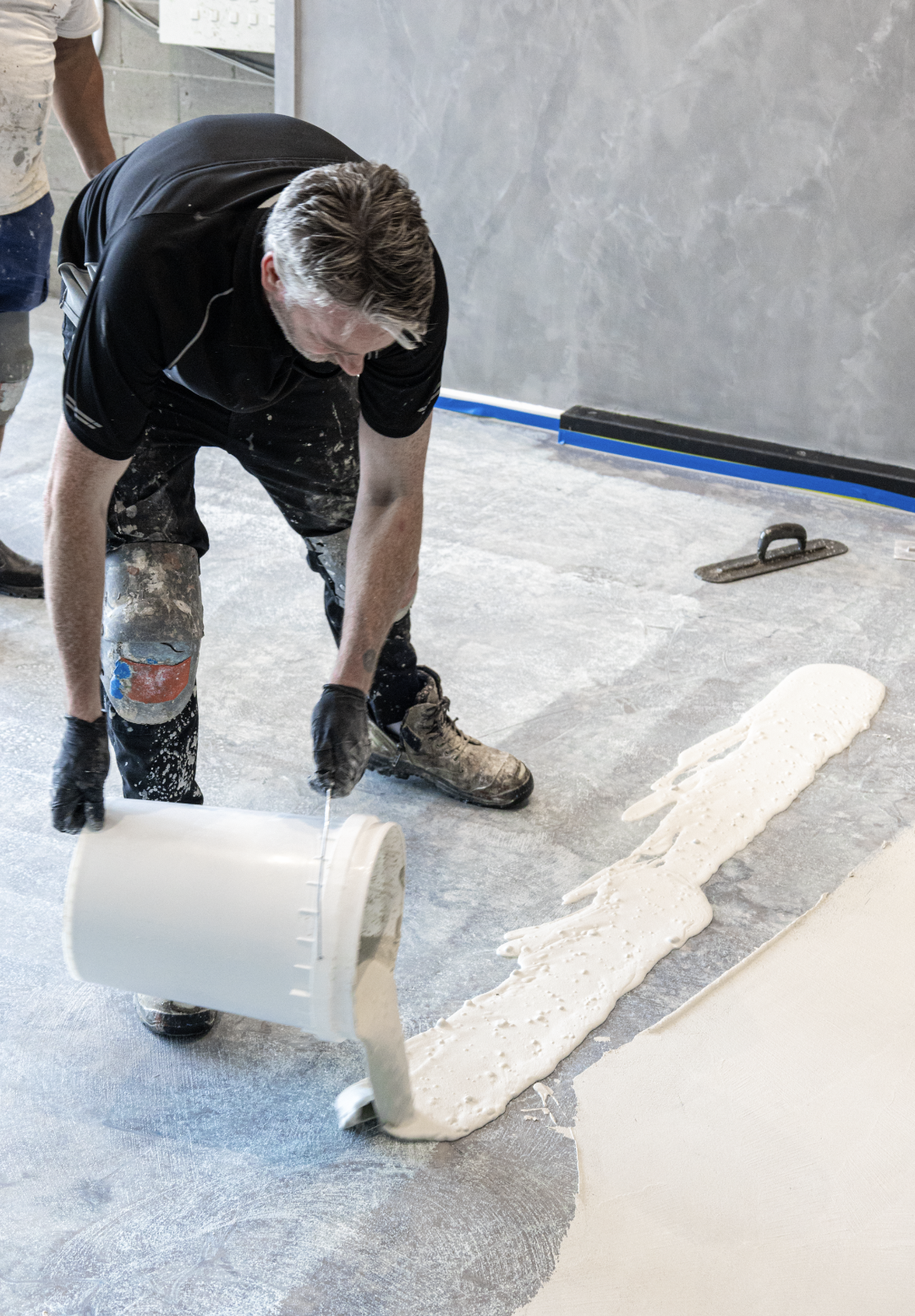
What Is Resurfacing?
Resurfacing is the process of installing a new surface layer over an existing material rather than removing it entirely. Instead of demolition, resurfacing allows you to:
Upgrade finishes with minimal disruption
Save time and labor costs
Avoid unnecessary waste
Achieve a modern, seamless new look
Microcement has become a leading solution in resurfacing projects because it combines durability with contemporary design, while bonding directly to existing surfaces. With our invention of X-Bond 30 years ago, we pioneered cross-linking polymer technology to create a strong molecular bond with substrates for lasting adhesion in resurfacing projects.
Keep reading to learn more about the most common resurfacing projects for microcement.
Next up on resurfacing:

Concrete Resurfacing
Over time, concrete surfaces can become cracked, worn and dated, discolored or uneven in texture. Rather than demolishing and then replacing the slab, microcement can be applied as a thin overlay on exiting concrete to transform the surface into a smooth, architectural finish.
Benefits of Concrete Resurfacing With Microcement
Seamless, modern appearance
Highly durable for residential and commercial use
Thin and lightweight application
Available in a wide range of colors and textures
Concrete resurfacing with microcement is ideal for floors, patios, driveways (with the correct system), and commercial spaces. X-Bond is also commonly specified as a solution where the weight or height of existing surfaces are concerned, as it has minimal structural impact.
Read more in our article What Is Concrete Resurfacing? and view examples on the Concrete Resurfacing Case Studies page.

Featured: Resurfacing Project
An external concrete pathway resurfaced with X-Bond Microcement.
Tile Replacement Without Demolition
Traditionally, replacing tiles can be expensive, messy, and time-consuming. That’s why tile resurfacing with microcement has become a popular alternative in remodeling projects. Microcement can just be applied directly over existing tiles (after some prep work) eliminating the need to remove them.
This is especially useful in bathrooms (including showers), kitchens, laundry areas and joinery pieces.
Why Microcement Works for Tile Resurfacing
Covers grout lines for a continuous finish
Minimal disruption during renovation
Waterproof systems available for wet areas
Creates a modern, minimalist look
You might be wondering how waterproofing fits into tile resurfacing projects, especially in wet areas like showers and bathroom floors. Liquid Membrane is an essential part of the X-Bond Microcement system — a high-performance 2-in-1 waterproofing and anti-fracture membrane. It is applied as the primary waterproofing layer directly over existing tiles before the application of X-Bond.
This creates a seamless, watertight barrier while also helping to prevent movement-related cracking, ensuring the finished surface remains durable, stable, and fully protected in moisture-prone environments.
Read more in Our Guide to Microcement and Tile Resurfacing

Resurfacing Other Substrates: Timber, Plaster, Screed & More
One of the key advantages of microcement is its ability to bond to more than just concrete or tile. With the right preparation and primer system, microcement can also be applied over:
Timber flooring
Plasterboard and drywall
Cement screeds
Rendered walls
Existing coatings
This makes microcement an incredibly versatile resurfacing option for both residential and commercial projects across interior and exterior floors and walls, as well as ceilings, bathrooms, countertops, and other joinery pieces. The result is a seamless and strong finish that suits modern architecture and interior design.
TLDR: Why Choose Microcement for Resurfacing Projects?
If you take anything away from all of the above, it’s that products like X-Bond are more than a decorative coating — it’s a complete resurfacing system designed for performance and style.
Key Benefits
Seamless, contemporary aesthetic
Strong adhesion to multiple substrates
Durable and easy to maintain
Compatible for wet areas including bathroom tile resurfacing
Minimal thickness with maximum impact
Suitable for indoor and outdoor use
Wide range of colors and texture finishes to choose from
For resurfacing projects where design matters as much as durability, microcement is the premium solution.
Partner with a Specialist Microcement Supplier in the USA
A successful resurfacing project starts with the right product system and expert support. As a trusted microcement supplier, SEMCO provides a high-performance resurfacing system with waterproof and high-traffic options, extensive color and finish selections, as well as technical advice as needed.
Whether you're resurfacing concrete, tiles, or other substrates, the X-Bond Microcement solution delivers modern results with lasting performance.
