
Microcement is known for its durability, but without a sealer, long-term performance is not a guarantee. Sealers are required over microcement finishes to protect the surface from moisture exposure, everyday wear, and environmental conditions. They can also influence the final appearance of microcement, including its sheen, texture, and colour depth.
Here’s a breakdown of how sealers work and why they’re essential for protecting microcement.
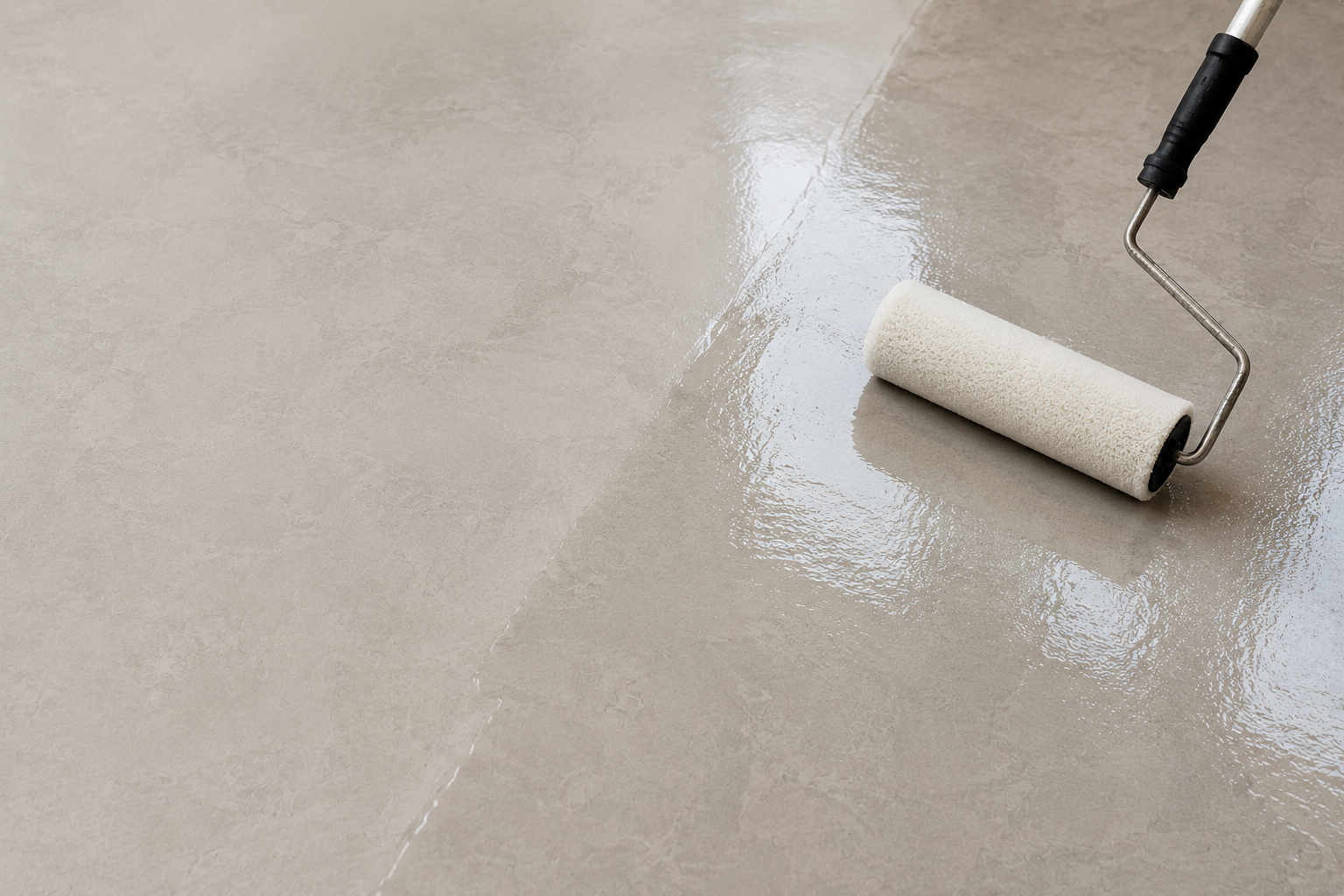
Why Does Microcement Need a Sealer?
Microcement is a porous cementitious material, meaning that without appropriate surface protection, it can be susceptible to absorbing liquids and contaminants.
Although polymer-modified microcement systems such as SEMCO X-Bond are engineered for improved flexibility, adhesion, and durability, the finished surface still requires a protective sealing system.
A sealer forms the exposed protective layer of the installation, helping the surface withstand everyday use, cleaning, moisture exposure, and environmental conditions.
At SEMCO, we've developed a range of professional-grade sealers to accommodate different X-Bond applications, levels of traffic, and finish preferences. Our most widely used option, SEMCO Sealer Matte, is a water-based polyurethane hybrid that provides long-lasting protection while maintaining a natural, low-sheen appearance.
The importance of sealing extends beyond preventing stains. It also affects the surface's resistance to wear, ease of maintenance, and the longevity of the complete microcement system.
For a closer look at how protective sealers influence stain resistance and more information on our sealer range, read our guide: Will Microcement Stain?
The Difference Between Waterproofing and Sealing Microcement
One of the most important distinctions in microcement installation is the difference between a sealer and a waterproofing membrane. Although the two are sometimes confused, they serve different purposes.
Waterproofing membranes are designed to prevent water from passing through an assembly and reaching the underlying substrate. In wet areas, this is particularly important for protecting building materials from moisture-related damage. It’s applied underneath the microcement.
Microcement sealers, on the other hand, primarily protect the exposed decorative surface. They’re applied over the top of the finished microcement surface (once it’s dried) to help reduce water absorption and surface contamination. They are not a substitute for a dedicated waterproofing system.
For example, when installing microcement in a shower, the installation would require a waterproofing membrane beneath the decorative coating, followed by an appropriate sealer over the finished surface.
SEMCO's X-Bond system can be combined with SEMCO Liquid Membrane to provide waterproofing protection as part of a complete installation system.
The membrane and sealer perform different functions, but together they contribute to the performance of the finished assembly.
Learn more in our Guide to Waterproofing Microcement.


How Sealers Affect the Appearance of Microcement
Sealers aren't just functional. They can also influence the final aesthetic of a microcement surface.
One of the reasons designers specify microcement is its natural variation in tone, texture, and movement. Unlike a uniform manufactured surface, the finish has subtle characteristics created during hand application.
The type of sealer selected can influence how these details appear.
Matte, Satin, and Gloss Finishes
For many residential and commercial X-Bond applications, SEMCO Sealer Matte is our most popular choice. Its low-sheen finish complements the natural appearance of microcement without introducing excessive reflectivity.
However, different projects call for different finishes. Our sealer range also includes Satin Stone, for projects requiring a satin appearance, and Titan Shield Gloss, which provides a higher-gloss finish alongside heavy-duty surface protection.
Choosing between these options isn't purely an aesthetic decision. The intended application, expected traffic, and environmental conditions should also be considered when specifying the sealer.
Color Depth and Tonal Variation
Some sealers can deepen the appearance of microcement colors, creating a slightly richer or more saturated finish. SEMCO Sealer Matte, for example, is designed to enhance the colour of X-Bond while retaining a natural-looking surface.
This is particularly relevant when specifying lighter neutral tones, where even a subtle change in colour depth can influence the overall design.
For projects where colour consistency is important, we recommend preparing a sample using the complete microcement and sealing system rather than assessing the unsealed coating alone.
Learn more about the design options of X-Bond Microcement.
Choosing the Right Sealer for Different Applications
Not all microcement surfaces experience the same conditions. A decorative feature wall in a residential living room has very different performance requirements from a restaurant floor or a shower. The sealing system should therefore be selected with the intended application in mind.
Microcement Floors
Flooring is exposed to repeated foot traffic, abrasion, dirt, and cleaning. SEMCO Sealer Matte is commonly specified for residential and commercial flooring because its polyurethane-hybrid formulation provides resistance to foot traffic, chemicals, and everyday wear.
For particularly demanding commercial and industrial environments, we also offer alternative sealing systems, including Titan Shield Gloss.
Slip resistance is another consideration, especially in bathrooms, entrances, and other areas where floors may become wet. The sealer, surface texture, and any specified slip-resistant additives can all influence the finished surface's slip characteristics.
Microcement Bathrooms and Showers
Bathroom sealers need to accommodate frequent moisture exposure, cleaning products, and body/hair products. Our SEMCO Sealer Matte is suitable for bathroom and wet-area microcement applications, providing a protective finish that helps resist moisture exposure and everyday wear.
However, even a high-performance sealer doesn't eliminate the need for appropriate substrate preparation, waterproofing, drainage, and detailing. These elements need to be considered together when specifying microcement for wet areas.
Microcement Countertops and Joinery
Countertops and joinery introduce different performance requirements from walls and floors, particularly where surfaces experience frequent contact with household products, cosmetics, or cooking ingredients. The selected sealer needs to accommodate these conditions while maintaining the intended finish.
SEMCO Sealer Matte is a practical protective option for many X-Bond applications, although the suitability of any sealing system should be assessed against the intended use.
For these applications, it's also worth considering how frequently the surface will be cleaned and whether it will experience direct heat, abrasion, or prolonged contact with liquids.
Exterior Microcement
Exterior surfaces require a sealing system suitable for outdoor exposure. SEMCO Sealer Matte is UV stable and formulated to resist yellowing and degradation, making it suitable for both interior and exterior cementitious surfaces.
Other sealers in our range can also be specified where different protective properties or aesthetic finishes are required.
Our microcement hub features guides to microcement per application.





Why Correct Sealer Application Matters
Even a high-quality sealer can underperform if it's applied incorrectly. Several factors influence the effectiveness of the finished protective coating.
Proper drying time: Before sealing, the microcement should be sufficiently cured, clean, dry, and free from dust or contaminants, in accordance with the manufacturer's requirements.
Application thickness: Applying too little sealer may leave the surface inadequately protected. Excessive application, on the other hand, can lead to uneven appearance or curing problems.
Number of coats: Each sealer requires a minimum number of coats for different applications. Requirements vary between sealing products and should always be checked before installation.
Curing conditions: Temperature, humidity, ventilation, and the time allowed between coats can all influence sealer performance.
Compatibility: Using a sealer designed for the specific microcement system helps reduce the risk of adhesion or performance issues.
For applicators, following the complete installation specification is essential. The durability of the finished surface depends on how the individual components perform together, not simply the quality of each product alone.
When Does Microcement Need Resealing?
A protective sealer is an exposed finish that may experience gradual wear over time. How frequently a surface requires resealing depends on several factors, including the sealer formulation, level of foot traffic, cleaning practices, and environmental exposure.
For example, a decorative wall in a residential interior may experience minimal physical wear, while a busy commercial floor is subject to repeated abrasion from footwear, dirt, furniture, and cleaning equipment.
Surfaces should be periodically assessed for changes in their protective finish, which may include uneven sheen, visible wear in frequently used areas, or deterioration of the existing coating.
That being said, our engineers designed the SEMCO sealers with strength in mind — so even high-traffic X-Bond flooring can last years without needing a reseal.
Maintaining Sealed Microcement Surfaces
One of the advantages of seamless microcement is that there are no grout joints to trap dirt and residue. However, this doesn't mean the surface is maintenance-free.
Regular cleaning helps prevent the accumulation of abrasive particles that can gradually wear down the protective sealer, particularly on flooring.
The cleaning products used also matter. Aggressive chemicals or abrasive equipment should be avoided. Find more on this our Microcement Maintenance Guide.
A Complete Microcement System Matters More Than Any Single Product
Ultimately, the long-term performance of microcement isn't determined by the microcement layers alone. What’s underneath and on top contribute greatly to the longevity of the finish. That’s why applicators should be confident and familiar with the complete X-Bond installation system.
At SEMCO, our X-Bond Microcement and professional sealing systems are designed to work together to achieve durable surface finishes for residential, commercial, and exterior applications.
Whether you're specifying a seamless bathroom, a high-traffic commercial floor, or an architectural feature wall, the sealer is an important part of achieving the desired appearance and performance.