
Why Stone Isn't Always the Best Choice for Every Project
Natural stone has long been associated with premium architecture. From marble kitchens to travertine bathrooms and limestone flooring, it's a material valued for its natural authenticity, durability and unique character.
But while stone remains an excellent choice for many applications, it isn't always the most suitable option.
Every material involves trade-offs. Understanding where stone excels, and where alternative finishes such as microcement may offer greater flexibility, can help you choose the right surface for your project.
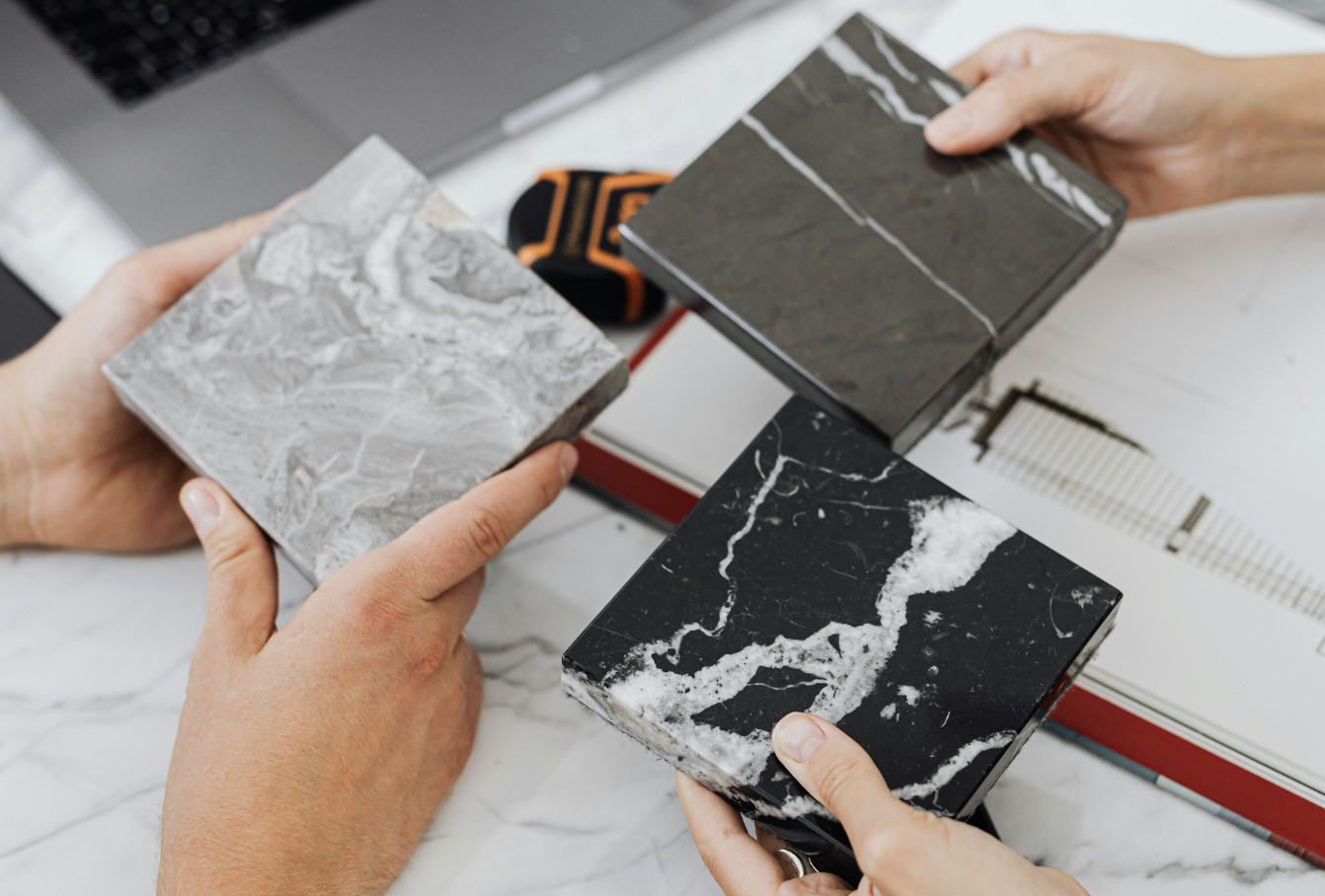
Stone Isn't Always Suitable for Renovations
Installing stone usually requires removing existing finishes before a new substrate can be prepared to support the slabs. For many renovations, this increases:
Demolition
Labor
Project costs
Construction waste
Installation time
Where suitable existing substrates are available, a thin and lightweight hand-applied render like microcement can be applied directly over them following the correct preparation process. Rather than replacing everything, homeowners can achieve an entirely new aesthetic while preserving much of the existing construction. This is especially advantageous in bathroom remodels where you have existing stone or tiles that you want to replace with a new finish.
SEMCO engineers formulated X-Bond Microcement with polymers for exceptional adhesion, flexibility and durability applied over suitable substrates rather than relying on heavy, solid construction.
Related Reading:

Seamless Design Isn't Always Possible With Stone
Stone is supplied in slabs or tiles. No matter how large those slabs become, there will usually be joins somewhere throughout the project. These create areas that can trap dirt or mold, especially in wet areas.
Rendered materials that are hand-applied as a seamless coating — like microcement — create continuous surfaces across floors, walls, splashbacks, staircases, island bases and other architectural elements with minimal visual interruption.
For projects aiming to create a calm, monolithic aesthetic, this continuity can become one of the defining design features, not to mention makes spaces easier to maintain.
Greater Freedom to Create Bespoke Forms
Stone is generally cut into flat pieces before being fixed in place. This makes achieving complex shapes and custom-built forms more difficult, expensive, and time consuming.
If you have design features like:
Curved island bases
Integrated rangehoods
Floating vanities
Sculptural staircases
Recessed shelving
Built-in seating
it's worth considering finishes that can be hand-applied over bespoke forms. X-Bond Microcement can often be applied over stable substrates such as MDF or fiber cement sheeting, allowing designers to achieve the appearance of solid concrete or stone without the weight, fabrication complexity or structural requirements.
Weight Matters More Than You Think
Large-format stone slabs are heavy. This can influence:
Structural design
Transport
Installation
Handling equipment
Labour requirements
Search for materials that achieve a similar contemporary, organic aesthetic while adding less height or weight to the substrate.
Related Reading: How Microcement Achieves Its Strength At Only 1/8” Thick
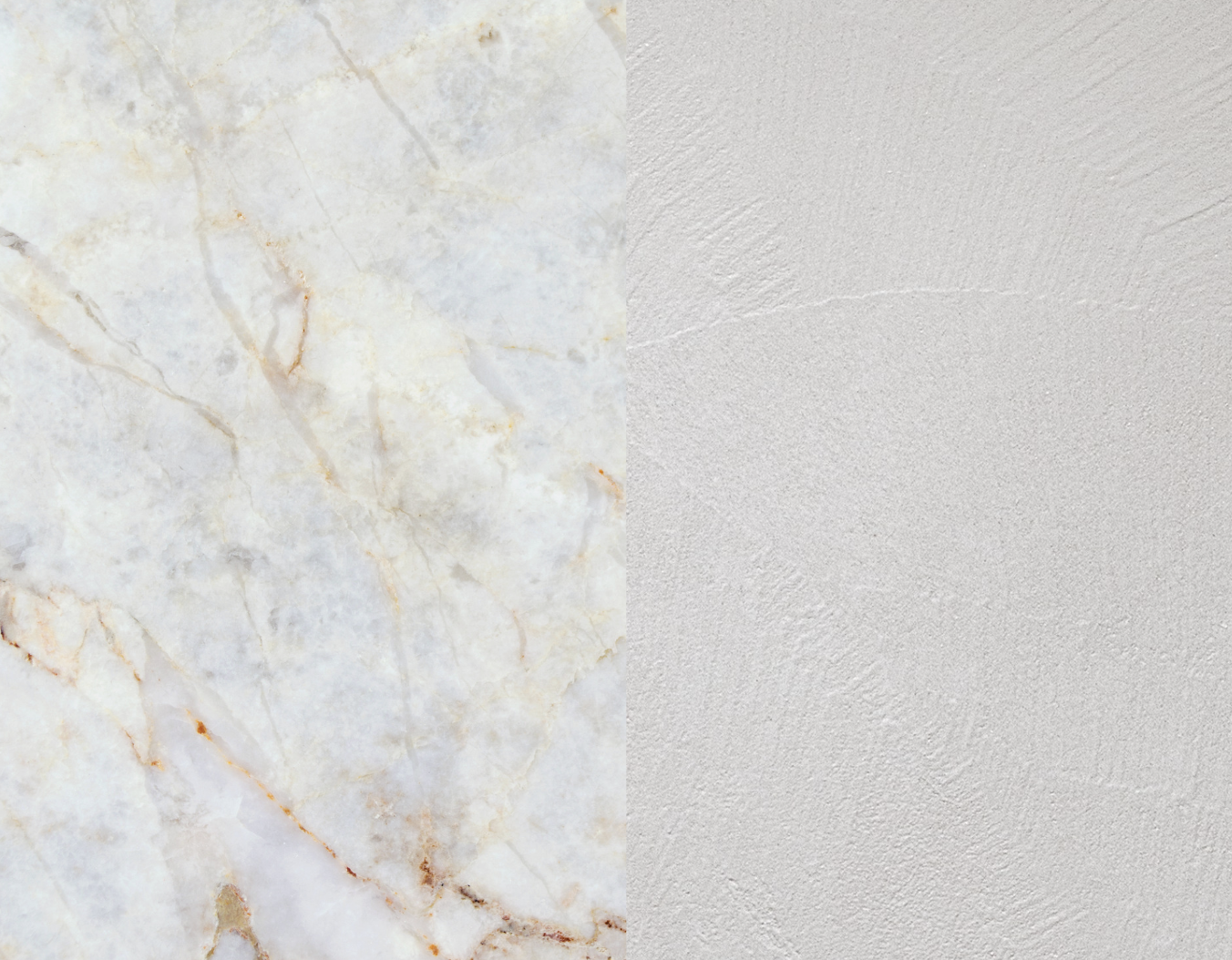
Comparison: Natural Stone vs Microcement
Natural stone remains one of the world's most beautiful building materials. For many projects, it is absolutely the right choice.
But for others, factors such as seamless design, renovation flexibility, reduced demolition, weight and architectural freedom may make microcement the more practical solution.
Rather than asking which material is "better," it's more useful to ask which material is better suited to the way you want your space to look, function and be built.
| Consideration | Natural Stone | X-Bond Microcement |
|---|---|---|
| Renovation-friendly | Usually requires removal of existing finishes | Can often be applied over suitable existing substrates |
| Weight | Heavy | Lightweight finish applied at approximately 1/8” thick |
| Design continuity | Slabs or tiles with joins | Seamless, hand-applied finish |
| Complex forms | Limited to fabrication | Can wrap curves, joinery and bespoke forms |
| Appearance | Sleek and shiny with natural veining and variation | Handcrafted texture with custom color options and subtle variations |
| Maintenance and durability | Extremely resilient once sealed — including wet areas | Extremely resilient once sealed — including wet areas |
Read Next: Comparing Microcement to Other Materials
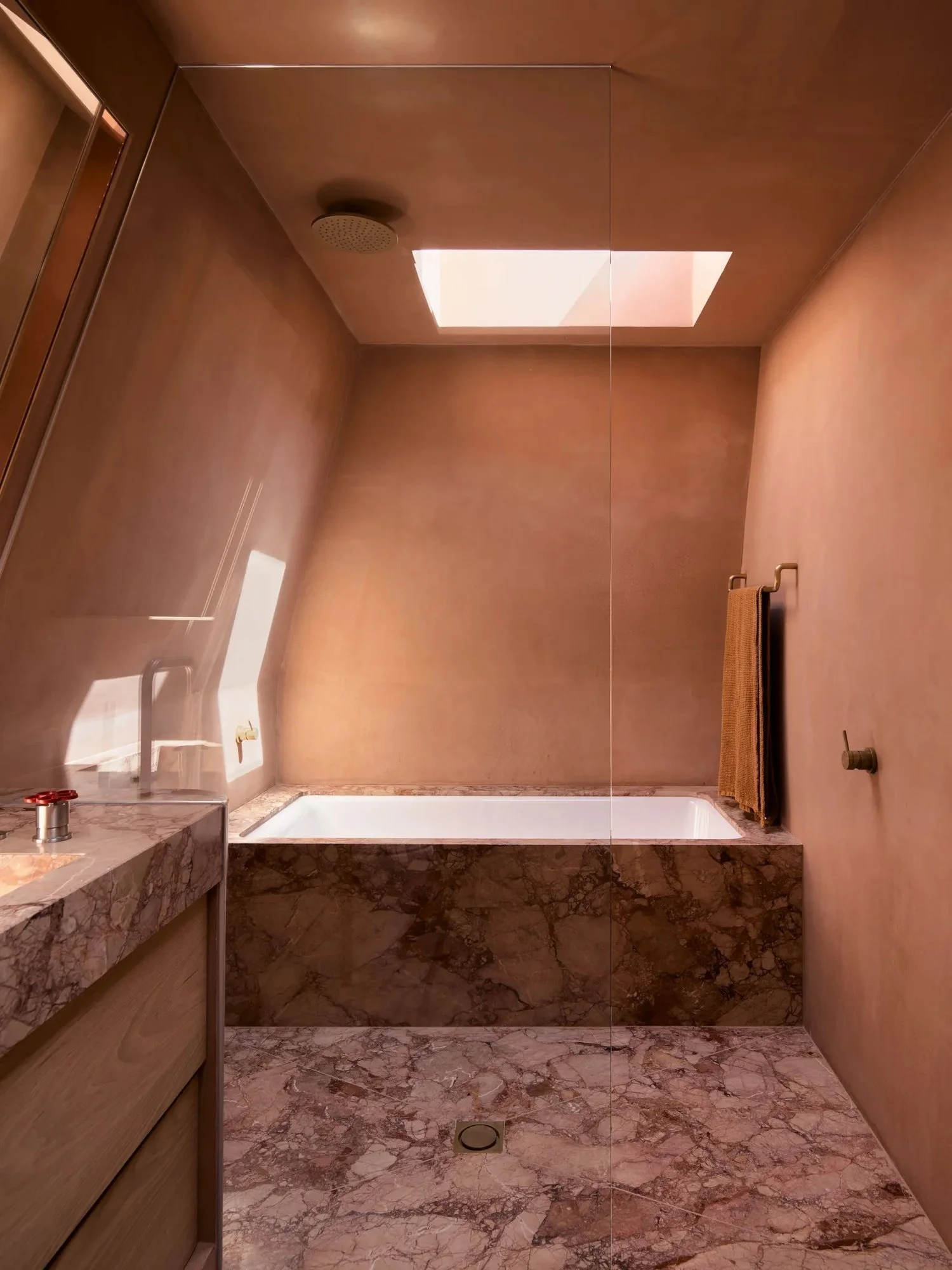
Rather than asking which material is better, it's more useful to consider which material best supports your design goals, existing structure and renovation budget. In many contemporary homes, the most successful projects combine the two; using natural stone as a feature material and microcement to create seamless continuity across larger surfaces.
For example:
A marble island paired with microcement flooring.
A travertine vanity meets a microcement shower.
Natural stone benchtops with a seamless microcement splashback.
Timber flooring complemented by microcement walls and ceilings.
Find the Right Finish for Your Project
Choosing a surface isn't simply about following trends, but about selecting the material that best suits the project, the client’s lifestyle, and design goals.
Whether that's natural stone, X-Bond Microcement or a thoughtful combination of both, understanding the strengths of each will help you create a space that performs as beautifully as it looks.