
Is Microcement Suitable To Be Applied On Stairs?
Stairs are one of the highest-traffic areas in any building. Every step experiences repeated foot traffic, impacts and daily wear, making material selection particularly important.
Microcement has become an increasingly popular choice for staircases thanks to its seamless appearance, durability and versatility. Whether you're building a new staircase or renovating an existing one, it offers a contemporary finish that can be applied to both the treads and surrounding walls for a cohesive, architectural look.
In this guide, we'll explore where microcement can be used on stairs, how it performs in high-traffic environments, and why it's become a popular alternative to traditional stair finishes.

Is Microcement Suitable for Stairs?
Yes, microcement is well suited to staircases — but it depends on the brand specified.
SEMCO X-Bond is engineered for high-traffic spaces. Despite its minimal thickness, our polymer-modified microcement system is designed to withstand everyday use without relying on density for strength.
Its excellent adhesion allows it to be applied over many suitable substrates, from concrete to stone tiles and even timber treads — while its hand-applied nature makes it ideal for the complex geometry of staircases.
Read more: How to Prepare Substrates for Resurfacing
Designed for High-Traffic Areas
Unlike decorative paints or thin coatings, professionally installed microcement systems are designed for everyday use.
Stairs receive high levels of foot traffic, making durability essential. When combined with the appropriate protective sealer, microcement creates a hard-wearing surface suitable for residential homes as well as commercial environments.
As with any flooring material, long-term performance depends on:
Correct substrate preparation
Skilled installation
Appropriate sealing
Routine maintenance
When these elements work together, microcement provides a durable surface capable of standing up to years of daily use.
Learn more about how X-Bond is designed for application to high-traffic flooring.

Create a Truly Seamless Staircase
One of the biggest advantages of microcement is its ability to continue beyond the stairs themselves.
Rather than stopping at each tread, the finish can extend across adjacent walls, landings, and flooring to create one continuous surface. This removes visual interruptions and gives staircases and surrounds a sculptural, monolithic appearance.
For contemporary homes, this continuity can make staircases feel like an integrated architectural feature rather than a separate construction element.
Read Next: Where Can Microcement Be Applied?
Ideal for Complex Stair Shapes
Unlike traditional concrete, which is poured into formwork, microcement is applied by hand using specialised trowelling techniques.
This allows installers to follow the precise contours of a staircase, whether it’s a classic straight staircase, floating stairs, or a curved feature staircase.
Because the finish is hand-applied, it can wrap risers, treads and detailed edges with far greater flexibility than conventional concrete construction.
This makes it an excellent option for both new architectural staircases and bespoke renovations.

Remodel Existing Stairs Without Demolition
Another benefit of microcement is the ability to transform existing staircases without complete removal — microcement resurfacing is an alternative to demolition.
Provided the substrate is sound and properly prepared, X-Bond Microcement can often be installed over existing surfaces, reducing demolition, labour and waste.
This makes it particularly suitable for resurfacing:
Natural stone stairs
Concrete stairs
Existing tiled stairs
Masonry staircases
Timber treads
Instead of removing an old staircase entirely, homeowners can achieve a completely modern appearance while retaining the existing structure. This approach not only reduces renovation costs but also shortens project timelines and minimises disruption.
Slip Resistance
Safety is an important consideration for any staircase. Different microcement finishes provide different levels of surface texture, and can also be mixed with non-slip additives, allowing installers to recommend a finish suited to the intended application. At SEMCO we also provide ADA Safety Flooring.
Maintenance
Microcement staircases are straightforward to maintain.
Without grout joints, there are fewer places for dust and dirt to accumulate, making routine cleaning simple.
Regular maintenance generally involves:
Sweeping or vacuuming loose debris
Cleaning with a pH-neutral cleaner
Wiping spills promptly
Avoiding harsh acidic or abrasive cleaning products
Like any sealed decorative surface, periodic resealing may be recommended over time depending on the level of traffic and wear.
Timber Stairs vs Microcement
| Feature | Timber | Microcement |
|---|---|---|
| Appearance | Warm, natural grain | Seamless plaster, stone or concrete-inspired finish |
| Joints | Individual boards and joins | Continuous surface |
| Design flexibility | Limited to board profiles | Hand-applied to almost any stair shape |
| Renovation | Often requires replacing existing finish | Can be applied over suitable existing stairs |
| Surrounding walls and flooring | Can continue seamlessly onto adjoining floors | Can continue seamlessly onto adjoining floors, walls, joinery and more |
| Durability | Can be susceptible to dents, scratches and wear in high-traffic areas | Designed to withstand everyday foot traffic without wear and tear |
Neither option is universally "better". The right choice depends on the style of the project, expected traffic levels and the desired outcome.
Both timber and microcement are durable staircase finishes when properly installed and maintained, but timber tends to show signs of wear easier.
Some homeowners prefer the warmth and character of natural woodgrain, while others are drawn to the seamless, contemporary aesthetic of microcement.
For renovations, microcement also offers the advantage of resurfacing existing stairs rather than replacing them, reducing demolition and disruption. Its hand-trowelled application also allows it to adapt to complex stair shapes and architectural details that would be difficult to achieve with traditional timber board profiles.
Read More: Comparisons Between Microcement and Other Materials
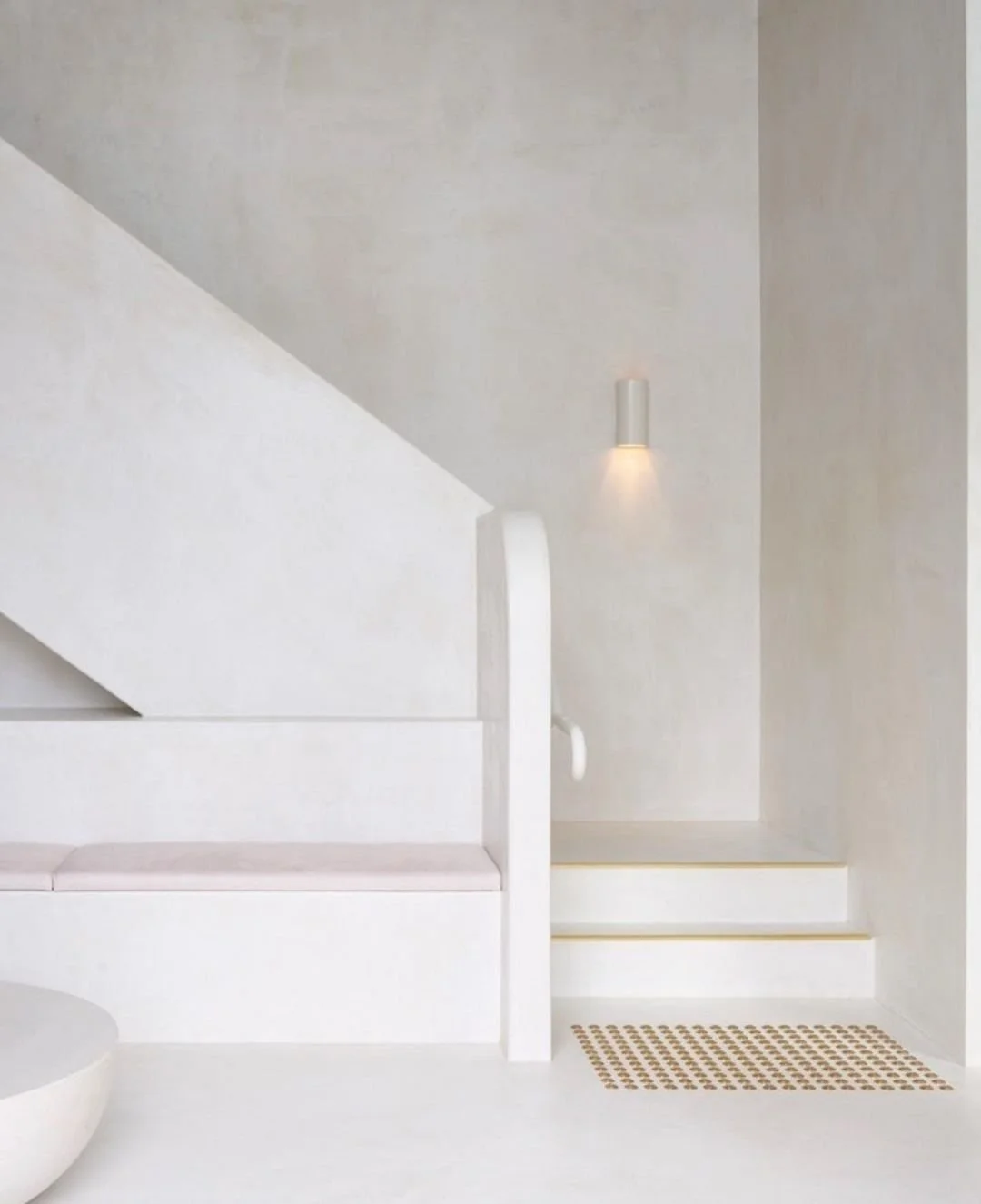
Products like X-Bond offer a durable, contemporary surface finish for stairs. Microcement’s ability to be hand-applied over complex shapes, combined with its suitability for high-traffic areas and renovation-friendly installation, makes it an increasingly popular choice for modern residential and commercial projects. If you’re looking for materials to make your staircase stand out, it’s worth considering microcement.